
- By
- Roof
- 0 Comment
What Causes Roof Leaks Around Chimneys and Vents?
A water stain near your fireplace or a damp spot on the ceiling may seem like a minor problem at first. However, moisture appearing around a chimney or roof vent can indicate a leak that deserves attention.
These areas are common trouble spots because they interrupt the otherwise continuous surface of a roof. Where a chimney or vent passes through roofing materials, additional components are needed to keep water from entering.
For homeowners in Maryland, heavy rain, changing temperatures, and seasonal storms can expose weaknesses around these connections. Understanding the possible causes can help you recognize warning signs and determine when professional roof repairs may be necessary.
Why Chimneys and Roof Vents Are Vulnerable to Leaks
Most residential roofing systems are designed to move rainwater downward toward the gutters. Shingles and other roofing materials overlap to help water flow away from the structure.
Chimneys and roof vents create openings in that system. To prevent leaks, the areas surrounding these openings rely on flashing, properly installed roofing materials, and other weather-resistant components.
Chimneys present an additional challenge because they are relatively large structures with multiple sides. Water must be directed around the chimney rather than allowed to collect along its edges.
Roof vents are generally smaller, but their openings still require proper waterproofing. Many plumbing vent penetrations use a flashing assembly with a flexible boot that fits around the pipe.
When these protective components deteriorate or become damaged, water may enter beneath the roof covering.
Damaged or Improperly Installed Chimney Flashing
One possible cause of chimney-related roof leaks is damaged flashing.
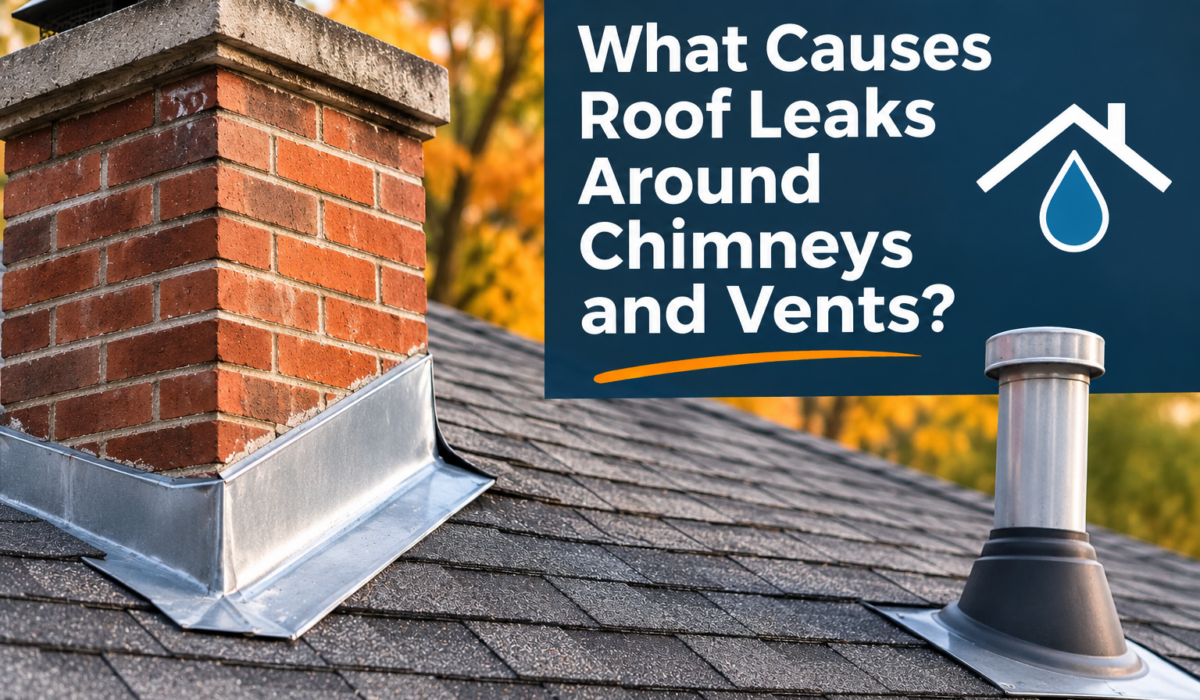
Chimney flashing commonly includes metal components installed where the roof meets the chimney. These pieces work together to direct water away from the joint between the two surfaces.
Over time, flashing may become loose, corroded, or separated from surrounding materials. Previous installation problems can also leave gaps that allow water to enter during heavy rain.
Some chimneys have a cricket, a small peaked structure installed on the uphill side to help divert water around the chimney. Where a cricket is needed, its condition and construction can affect drainage.
A leak that appears near a chimney does not automatically mean the flashing is responsible. However, the flashing system is one of the areas a roofing professional should evaluate.
Our related article on how late-summer storms can impact your roof in Maryland explains how wind-driven rain and storm damage can expose vulnerable roofing connections.
Cracked Chimney Masonry or a Damaged Chimney Crown
Not every leak near a chimney originates in the roof itself.
Brick chimneys are exposed to rain, snow, and temperature changes throughout the year. Over time, mortar joints can deteriorate, and cracks may develop in masonry components.
The chimney crown, which covers the top of many masonry chimneys, can also develop cracks. Depending on the chimney’s construction, damaged crowns, caps, or masonry may allow moisture to enter.
Water entering through a chimney can sometimes appear as staining near the fireplace, on adjacent walls, or in the attic.
Because these symptoms may resemble a roofing leak, identifying the actual entry point is important before repairs begin.
A roofing contractor may need to coordinate findings with a qualified chimney professional if the problem involves masonry or chimney-specific components rather than roofing materials.
Worn or Cracked Roof Vent Boots
Roof vents are another common source of water intrusion.
Many homes have plumbing vent pipes extending through the roof. These pipes help the plumbing system function properly, and each roof penetration requires a watertight connection.
On some roofing systems, a vent boot includes a rubber or flexible seal that fits around the pipe.
Exposure to sunlight, temperature changes, and aging can cause this material to crack, harden, or separate. Once the seal deteriorates, rainwater may enter around the pipe.
Metal flashing around the vent may also become damaged or improperly positioned.
These problems are sometimes difficult to identify from the ground. A professional inspection can determine whether the vent boot, surrounding flashing, or nearby roofing materials need attention.
Damaged Shingles or Roofing Materials Nearby
Sometimes a leak appears near a chimney or vent even though the penetration itself is not the original problem.
Missing, cracked, lifted, or deteriorated shingles can allow water beneath the roof covering. Once inside, water may travel along the roof decking or framing before becoming visible indoors.
This means the location of a ceiling stain does not always identify the exact point where water entered.
Wind-driven rain can make the situation more complicated by pushing moisture beneath vulnerable roofing materials.
If your home experienced a recent storm, reviewing the warning signs described in our August roof maintenance guide may help you recognize other visible roofing concerns.
A thorough evaluation should consider both the roof penetration and the surrounding roofing system rather than assuming one component is responsible.
Signs of a Roof Leak Around a Chimney or Vent
Some leaks become obvious during heavy rain, while others develop slowly and remain unnoticed for weeks or months.
Common warning signs include water stains on ceilings near a chimney or vent pipe, damp attic insulation, peeling paint, discolored drywall, or a persistent musty smell.
You may also notice that a stain becomes darker after rain or melting snow.
In accessible attic spaces, moisture may appear on the underside of roof decking or along framing near a penetration. However, condensation can sometimes produce similar symptoms, particularly during colder weather.
Avoid assuming that every damp surface indicates a roof leak. The source should be identified before repairs are recommended.
If water is actively entering your home, keep people and belongings away from affected areas. Be especially cautious around electrical fixtures, outlets, and wet ceilings. Contact an appropriate professional promptly rather than attempting to investigate from the roof.
Why Chimney and Vent Leaks May Become More Noticeable in Winter
November is a useful time for Maryland homeowners to pay attention to existing roof concerns.
As temperatures fall, the region may experience cold rain, occasional snow, freezing precipitation, and repeated temperature changes.
Moisture that enters small gaps may contribute to additional deterioration when freezing and thawing occur. Snow accumulation and melting can also expose vulnerable connections around roof penetrations.
A leak that seemed minor during a summer storm may become more noticeable after repeated periods of wet weather.
This does not mean every chimney or vent requires repair before winter. Rather, visible staining, recurring moisture, or known damage should be evaluated instead of ignored.
Addressing the source of water intrusion promptly can help limit damage to surrounding materials.
When Should You Call a Roofing Professional?
If you notice recurring stains, damp insulation, or water entering near a chimney or vent, a professional inspection is the safest next step.
A roofing contractor can examine the surrounding shingles, flashing assemblies, vent boots, and related roofing materials to help identify the source.
Depending on the findings, the solution may involve replacing a damaged vent boot, repairing flashing, addressing nearby shingles, or recommending additional evaluation of the chimney itself.
Avoid climbing onto the roof to inspect these areas. Working near chimneys and roof penetrations can be hazardous, particularly on steep, wet, or icy surfaces. Applying caulk without understanding the underlying problem may also conceal damage without correcting the leak.
Walter Brown Services provides roofing repair services for homeowners dealing with leaks, storm damage, and deteriorating roofing materials.
Protect Your Maryland Home From Chimney and Vent Leaks
Leaks around chimneys and roof vents can have several causes, from damaged flashing and worn vent boots to deteriorated masonry or nearby shingles. Because water can travel before becoming visible, identifying the source is essential to choosing the right repair.
Walter Brown Services helps homeowners throughout Howard County and surrounding Maryland communities address roofing problems before they lead to further damage. If you have noticed moisture near a chimney or roof vent, our team can evaluate your roofing concerns and discuss appropriate repair options.
To request a free estimate for your Maryland home, call (410) 796-4322 or contact Walter Brown Services online.
