
- By
- Roof
- 0 Comment
Why Roof Flashing Matters Before Winter Weather
As November brings cooler temperatures to Maryland, homeowners often focus on clearing gutters, checking shingles, and preparing their homes for winter. One important part of the roof, however, can be easy to overlook: flashing.
Roof flashing helps prevent water from entering areas where roofing materials meet chimneys, vents, skylights, and other roof features. Although these sections may represent only a small portion of your roof, problems with flashing can allow moisture to reach the materials underneath.
Before winter rain, snow, and freezing temperatures arrive, understanding the condition of your roof flashing can help you recognize potential problems and address them before they become more serious.
What Is Roof Flashing, and Why Is It Important?
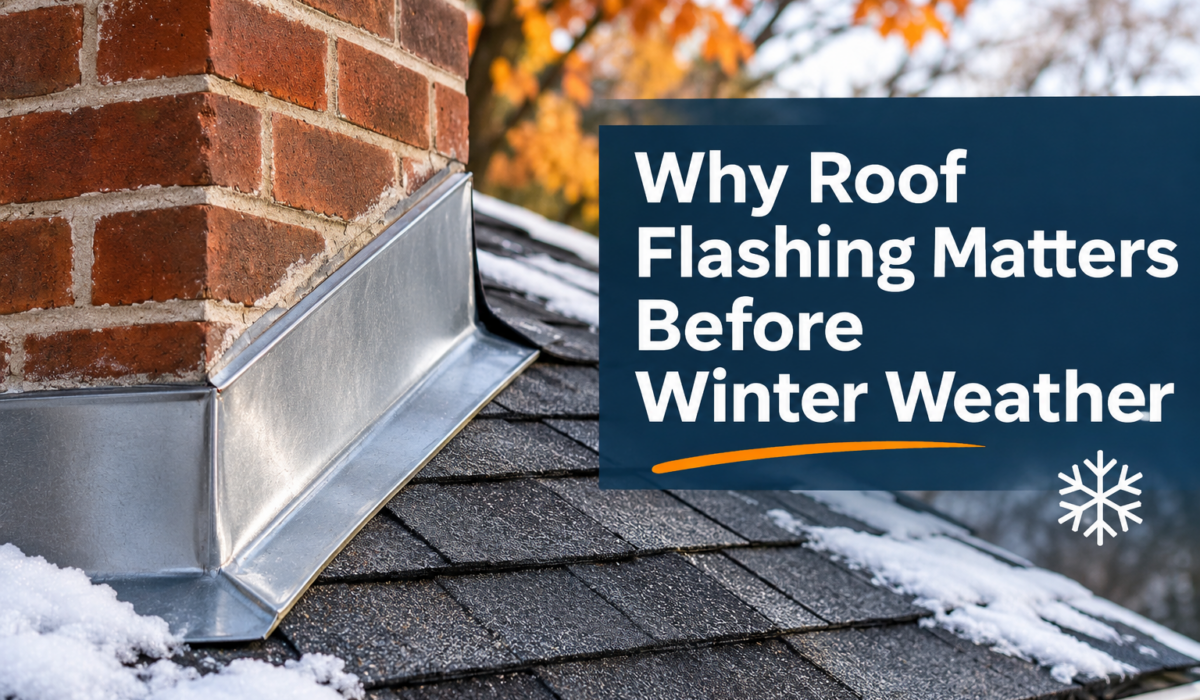
Roof flashing is a thin, water-resistant material, commonly made from metal, installed around roof openings, transitions, and joints. Its purpose is to guide water away from vulnerable areas and onto the surrounding roofing surface.
Shingles are designed to shed water across the main sections of a roof. However, places where the roof meets another structure require additional protection.
Flashing is commonly installed around:
- Chimneys and masonry structures
- Plumbing vents and other roof penetrations
- Skylights
- Roof valleys and certain wall-to-roof connections
When properly installed, flashing works with the surrounding roofing materials to direct rainwater away from these areas.
If flashing becomes loose, damaged, or improperly sealed, water may find its way beneath the roof covering. Over time, that moisture can affect roof decking, insulation, and interior finishes.
How Maryland Winter Weather Can Affect Roof Flashing
Maryland winters can bring a combination of cold rain, snow, ice, and changing temperatures. These conditions place additional demands on roofing systems, particularly around joints and roof penetrations.
Repeated Freezing and Thawing
Temperatures may rise above freezing during the day and fall again overnight. When moisture enters an existing gap and freezes, expansion can place additional stress on surrounding materials.
Repeated freeze-thaw cycles may worsen already vulnerable connections.
Snow and Ice Accumulation
Snow can collect around chimneys, skylights, and other roof features. As it melts, water must move across the roof and drain properly.
If flashing has gaps or damaged connections, melting snow may expose those weaknesses. Ice buildup can also interfere with normal drainage, particularly where other roofing or gutter problems are present.
Wind-Driven Rain
Late fall and winter storms sometimes bring strong winds and prolonged rainfall. Wind-driven rain can reach roof transitions from directions that ordinary rainfall may not.
Flashing that has shifted or separated may be less effective during these conditions.
These seasonal risks are another reason to address existing roof concerns before winter weather becomes more frequent.
Common Signs Your Roof Flashing May Need Attention
Flashing problems are not always obvious from outside the home. Some warning signs appear indoors, while others may be visible during a safe ground-level inspection.
One possible sign is staining on ceilings or walls near a chimney, skylight, or roof transition. Peeling paint, damp drywall, or moisture in the attic may also indicate that water is entering somewhere above.
From the ground, homeowners may occasionally notice flashing that appears bent, displaced, or separated from surrounding materials. However, many flashing problems cannot be identified reliably without a closer professional inspection.
Pay attention to when moisture appears. A stain that develops or becomes darker after rain or melting snow may indicate a roofing issue, although condensation and other moisture sources can produce similar symptoms.
For more guidance on recognizing damage without climbing onto the roof, read our article on how to spot hidden roof damage after a summer storm.
Why Flashing Problems Should Be Addressed Before Winter
A small flashing issue does not necessarily mean your entire roof needs replacement. In some cases, a targeted repair may be appropriate, depending on the condition of the flashing and surrounding roofing materials.
However, delaying an inspection can allow water intrusion to continue through multiple storms.
Moisture that enters beneath the roof covering may eventually damage roof decking, insulation, ceilings, or walls. The longer a leak continues, the harder it may become to identify its original source.
Fall provides an opportunity to evaluate suspicious areas before snow, ice, and colder temperatures complicate the situation.
Homeowners who have already noticed signs of moisture should not wait for a seasonal maintenance appointment. Prompt attention is especially important when active leaking is present.
What Happens During a Professional Flashing Inspection?
A roofing professional can examine flashing as part of a broader assessment of the roof’s condition.
The inspection may include checking whether flashing remains properly positioned, looking for corrosion or physical damage, evaluating connections around roof penetrations, and examining nearby shingles or other roofing materials.
The surrounding area matters because water does not always enter directly above the visible interior stain. It may travel along framing or other surfaces before becoming noticeable inside the home.
A professional can help determine whether the concern involves flashing, nearby roofing materials, or another source of moisture.
If repairs are needed, the appropriate solution depends on the roof design, materials, and extent of damage. Simply applying additional caulk over a problem area is not always a durable solution, especially when flashing has been incorrectly installed or underlying materials have deteriorated.
Walter Brown Services offers professional roofing repairs for Maryland homeowners dealing with leaks, damaged shingles, and other roofing concerns.
How Homeowners Can Prepare Safely for Winter
You do not need to climb onto your roof to take a few useful preventive steps.
Walk around your property and look for obvious changes in the roof’s appearance. Check accessible attic areas for staining or damp insulation, particularly after heavy rain. Keep gutters clear so water can drain away from the roof edge.
If your home has a history of leaks around a chimney, vent, or skylight, make a note of when the problem occurs and where moisture appears. This information can help a roofing professional investigate.
Avoid walking on the roof, removing flashing, or attempting repairs from a ladder. Roof surfaces can be slippery even before winter, and working around roof penetrations creates additional fall and damage risks.
For a broader seasonal maintenance perspective, our winter-to-spring roof and gutter maintenance guide explains other areas homeowners should monitor as temperatures change.
Prepare Your Roof for Winter With Walter Brown Services
Roof flashing may be a small part of your roofing system, but it plays an important role in keeping moisture out of your home. Recognizing warning signs and addressing concerns before winter can help prevent avoidable damage.
Walter Brown Services provides roofing repair services for homeowners throughout Howard County and surrounding Maryland communities. Whether you have noticed a possible leak or are concerned about damaged flashing, our team can help evaluate the problem and recommend appropriate repairs.
To request a free estimate for your Maryland home, call (410) 796-4322 or contact Walter Brown Services online.
