
How Winter Weather Affects Your Roof in Maryland (And What to Check This Spring)
Winter in Maryland can be hard on your home, especially your roof. Snow, freezing rain, fluctuating temperatures, and strong winter winds all put stress on roofing materials. While some damage may be obvious, many roofing problems develop slowly and may not become noticeable until the weather warms up in spring.
For homeowners across Maryland, including Howard County and surrounding areas, early spring is the ideal time to check your roof for signs of winter damage. Identifying potential issues early can help prevent leaks, structural damage, and expensive repairs later in the year.
Freeze-Thaw Cycles Can Damage Shingles
One of the most common causes of winter roof damage in Maryland is the freeze-thaw cycle. During the day, sunlight and warmer temperatures can melt snow and ice on your roof. At night, when temperatures drop again, that moisture refreezes.
When water seeps under shingles and freezes, it expands. Over time, this expansion can cause shingles to lift, crack, or become loose. Even small cracks can allow water to enter the roof system during spring rainstorms.
Homeowners should look for signs such as:
- Curling or cracked shingles
- Shingles that appear lifted or loose
- Missing shingles after storms
If shingles are damaged, repairing them quickly can prevent water from penetrating deeper layers of the roof.
Ice Dams and Gutter Problems
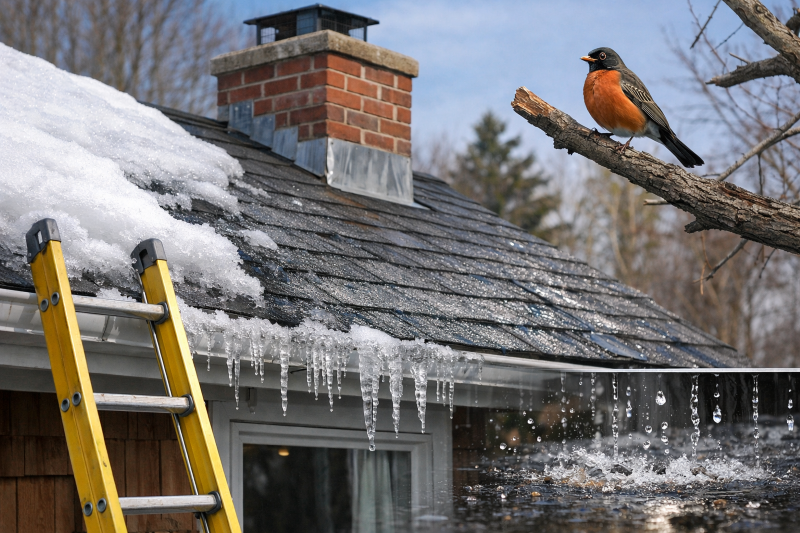
Ice dams are another common issue during Maryland winters. An ice dam forms when melting snow flows down the roof and refreezes near the edge, creating a barrier that prevents proper drainage.
When water cannot drain through the gutters, it may begin to pool and eventually seep under shingles or flashing. This trapped water can cause interior leaks, ceiling stains, and insulation damage.
In addition to checking the roof itself, homeowners should inspect their gutters and downspouts for winter damage. Heavy snow and ice can pull gutters loose from the roofline or clog them with debris.
Signs of gutter issues include:
- Sagging or detached gutters
- Water overflowing during rain
- Downspouts that are blocked or not draining properly
Keeping gutters clear and functioning properly helps protect both the roof and the home’s foundation.
Hidden Roof Leaks After Snow Melt
Many roof leaks are not immediately visible during winter months. Snow buildup may temporarily cover problem areas, and homeowners may not notice water intrusion until snow begins to melt.
As spring rain arrives, leaks may become more apparent. Water may travel along beams or insulation before appearing inside the home, which can make the source difficult to identify.
Some common signs of a hidden roof leak include:
- Water stains on ceilings or walls
- Damp insulation in the attic
- Mold or mildew smells
- Peeling paint near the ceiling
If any of these signs appear, it is important to have the roof inspected as soon as possible to prevent further damage.
Wind Damage From Winter Storms
Winter storms in Maryland often bring strong winds that can loosen roofing materials. Even if shingles remain attached, wind may weaken the adhesive seals that keep them in place.
Loose flashing around chimneys, skylights, and vents is another potential issue caused by winter winds. Flashing is designed to prevent water from entering vulnerable areas of the roof. When flashing becomes loose or damaged, water can seep into the roof structure.
Because wind damage is not always visible from the ground, a professional roof inspection can help identify areas that need repair.
Tree Debris and Roof Surface Damage
Another issue that can occur during winter is damage from fallen branches or debris. Snow and ice buildup on tree branches may cause them to snap and fall onto the roof.
Even small branches can scratch shingles, dislodge granules, or damage roof vents. Over time, these small problems can shorten the lifespan of roofing materials.
Homeowners should check their roof and yard for signs of fallen debris and consider trimming branches that hang close to the roofline.
Why Spring Is the Best Time for a Roof Inspection
Spring provides the perfect opportunity to assess winter damage and prepare your home for the months ahead. Addressing roofing issues early can help homeowners avoid larger problems during spring storms or summer heat.
A professional roofing inspection can identify damage that may not be visible from the ground and provide recommendations for repairs or maintenance.
Regular roof maintenance also helps extend the life of your roof and protects the value of your home.
For homeowners in Maryland, scheduling a spring roof inspection can provide peace of mind and ensure your roof is ready for the changing seasons.
