
5 Signs Your Home’s Siding May Not Survive Another Maryland Storm Season
Your home’s siding does more than improve curb appeal. It serves as one of the first lines of defense against Maryland’s changing weather conditions. During the summer months, homes across Maryland experience heavy rain, humidity, high temperatures, and severe thunderstorms that can gradually wear down siding materials.
Unfortunately, many homeowners do not realize their siding is failing until moisture damage or costly repairs appear. Knowing the warning signs early can help you protect your home before summer storm season reaches its peak.
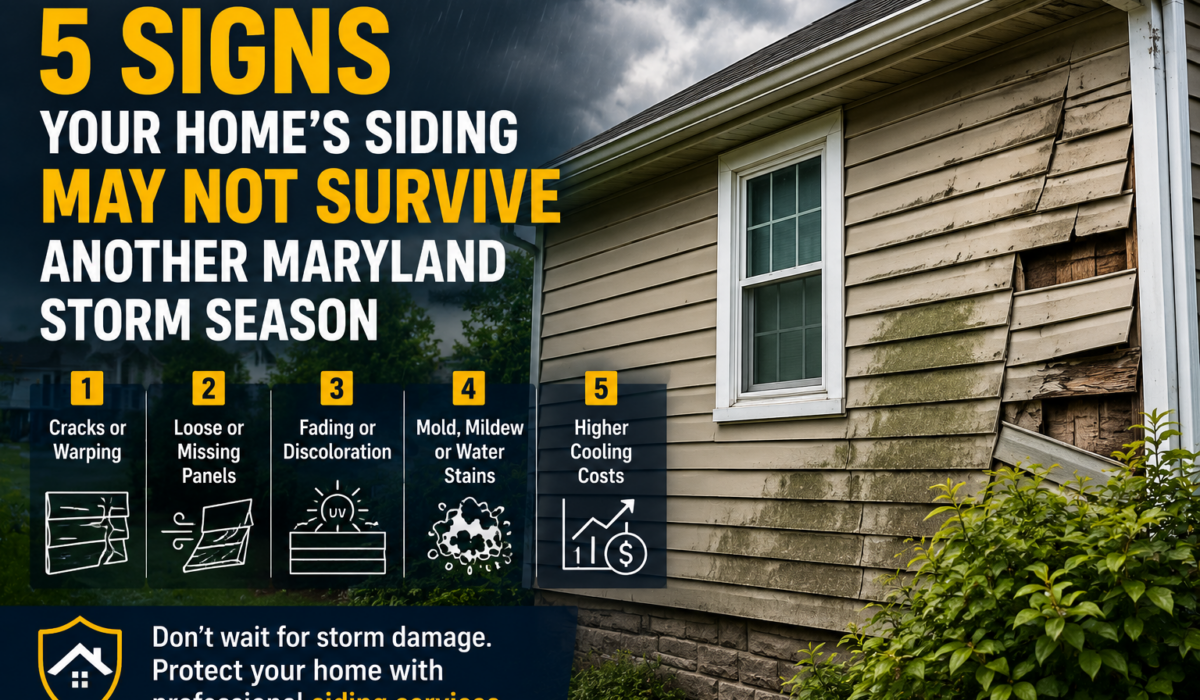
1. Cracks or Warping in the Siding
Cracks, bending, or warped siding panels are often early signs of weather-related damage. Heat exposure during Maryland summers can cause siding materials to expand and weaken over time.
Even small cracks can allow moisture to enter behind the siding, potentially leading to:
- Water damage
- Mold growth
- Rotting wood
- Structural deterioration
If you notice visible warping or cracking, it may be time for a professional inspection.
2. Loose or Missing Siding Panels
Strong summer storms and heavy winds can loosen siding panels or pull them away from the home entirely. Once siding becomes loose, water can easily penetrate underneath the surface.
Loose siding may also increase the risk of:
- Pest intrusion
- Interior leaks
- Reduced insulation performance
- Additional storm damage
Addressing loose panels early can help prevent more expensive repairs later.
3. Fading or Discoloration
While fading may seem cosmetic, excessive discoloration can actually indicate that your siding materials are reaching the end of their lifespan.
Years of UV exposure from the sun can weaken siding and reduce its ability to properly protect your home. If your siding looks severely faded, chalky, or uneven in color, it may no longer be providing full protection against the elements.
4. Mold, Mildew, or Water Stains
Maryland’s humid climate creates ideal conditions for moisture buildup. If you notice mold, mildew, or dark streaks forming on your siding, there could be trapped moisture behind the panels.
This is especially common around:
- Window frames
- Corners
- Gutters
- Roof edges
Ignoring these warning signs may allow hidden moisture damage to spread inside the walls of your home.
5. Higher Cooling Costs During Summer
Damaged or aging siding can affect your home’s insulation and energy efficiency. If your cooling bills seem unusually high during the summer, your siding may no longer be sealing your home properly.
New siding can help:
- Improve insulation
- Reduce heat transfer
- Increase indoor comfort
- Lower energy costs
Why Summer Is a Good Time to Replace Siding
Summer weather typically provides ideal conditions for siding inspections and installation projects. Replacing damaged siding before fall and winter can help ensure your home is protected year-round.
New siding can also:
- Improve curb appeal
- Increase home value
- Enhance energy efficiency
- Protect against future weather damage
Protect Your Home with Walter Brown Services
At Walter Brown Services, we help homeowners throughout Maryland protect and improve their homes with professional siding services, exterior inspections, and storm damage repairs.
Whether your siding has visible damage or you simply want a professional evaluation before storm season intensifies, our team is here to help.
Contact Walter Brown Services today to schedule a siding inspection and exterior assessment.
